Ciao-Sescu
Benno
Our next country on the way home is Romania. A country with a rather questionable reputation. I’m curious to see what has changed since my last visit.
Palace of Parliament
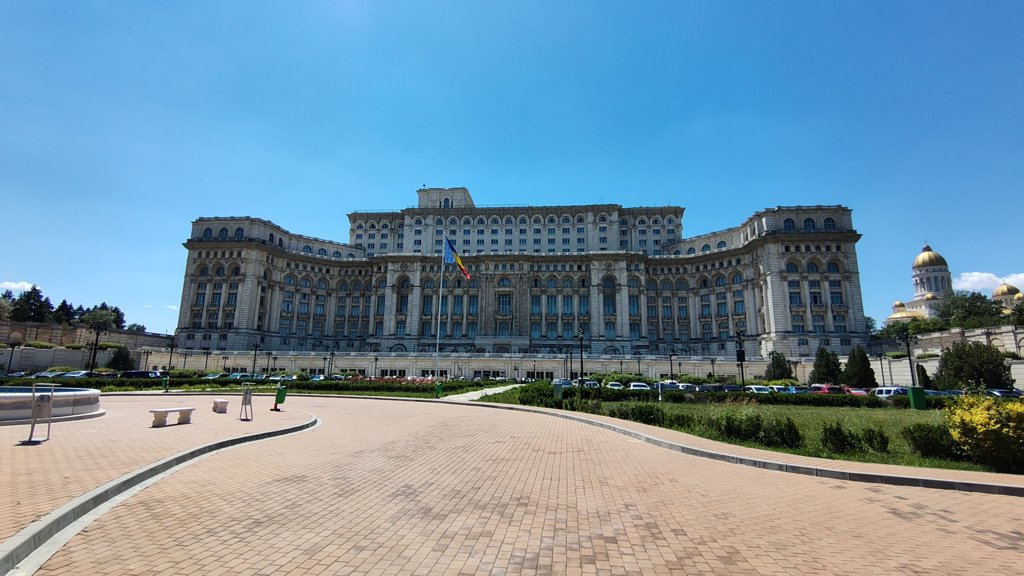
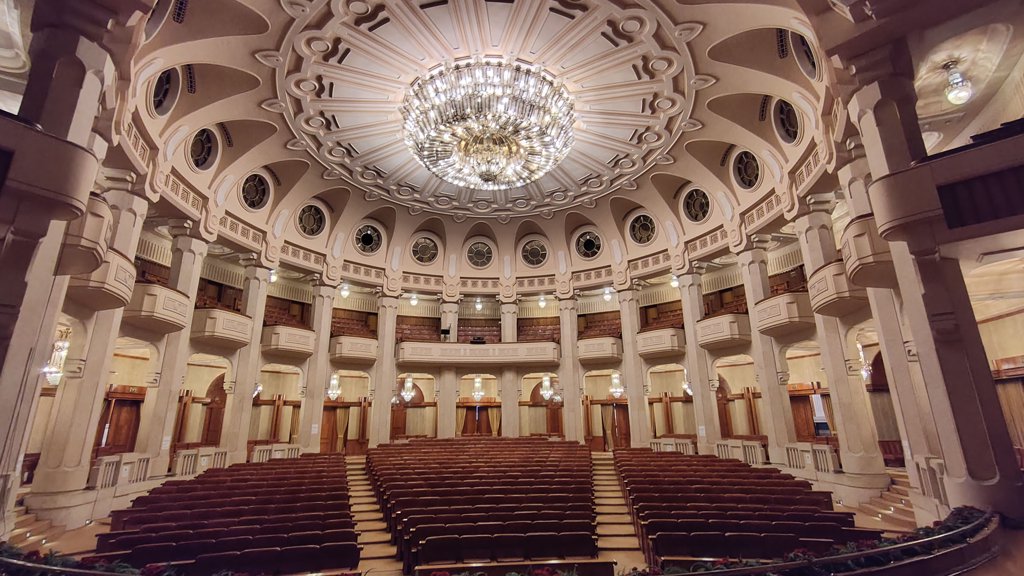
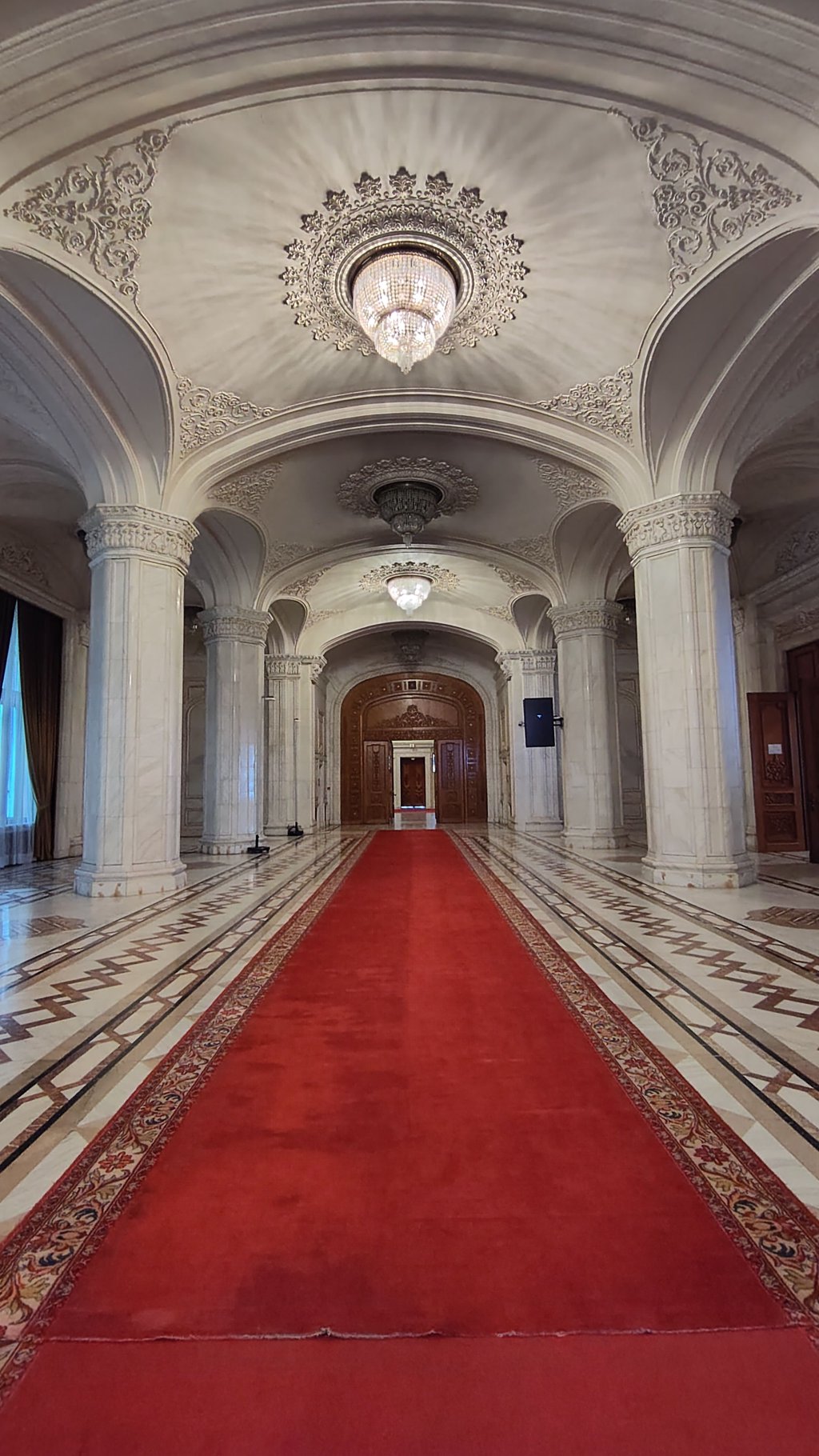
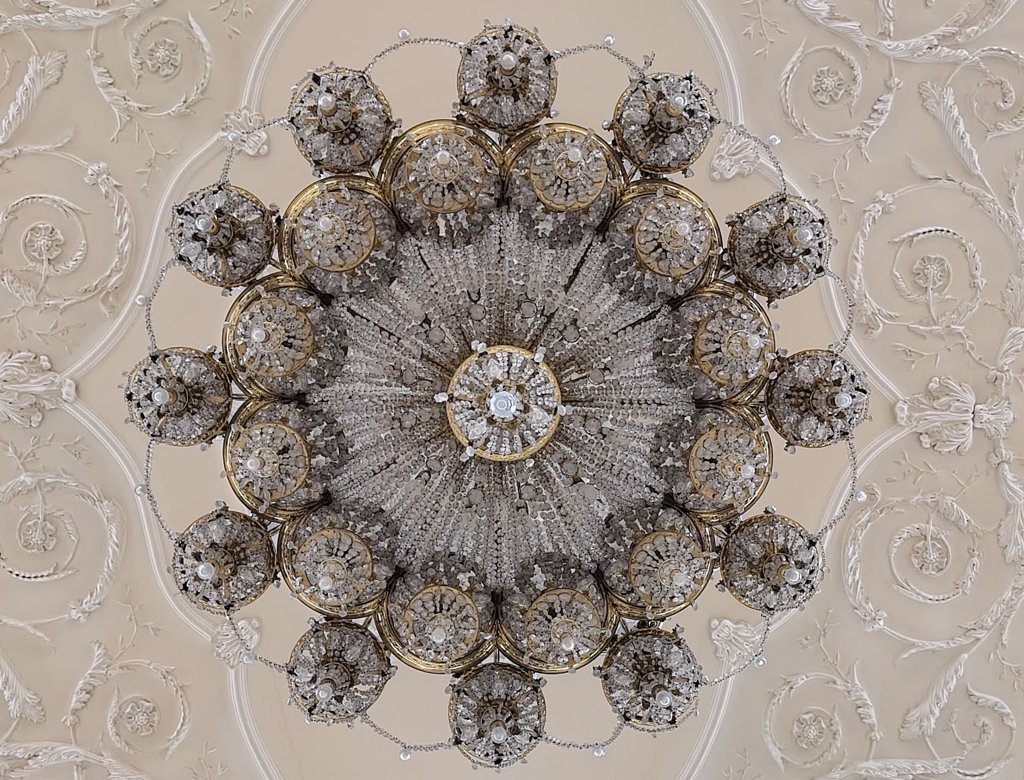
One item on my “once-in-a-lifetime list” is the Palace of Parliament in Bucharest. It is the heaviest building in the world and the second-largest government building, with only the Pentagon being bigger. And it really is impressive. In the 20th century, palaces were not built for gods or for kings, but for bureaucrats.
The question is why a country like Romania needs such a building. Of course, it does not. But Romania was a socialist republic, run by the dictator Nicolae Ceaușescu and his wife Elena. Ceaușescu was a dyed-in-the-wool Stalinist and clearly had an ego problem. He wanted to build a seat of government that matched his self-image and the power of the Romanians. For that, he had an entire district with 50,000 residents flattened.
One thing has to be said for Ceaușescu: he had taste. The inside of the building is in parts breathtakingly beautiful. Sure, it is pompous, but never tacky. The Art Deco concert hall is among the best things I have seen. Beautiful work. You cannot help but admire the regional craftsmanship.
The construction of the building must have swallowed a huge share of state spending. And so the whole venture did not end well for the Ceaușescus either. They were sentenced to death in a show trial and more or less shot live on TV before the building was even finished. That was 1989, I was 10 years old then and still remember it. At school we made jokes about Ciao-Sescu and my parents were shaken. Not because they thought anything of Ceausescu or doubted that he got what he deserved, but because it was a crazy time, with the Warsaw Pact collapsing and public executions. Communism completely destroyed these countries, politically, economically, and morally. Millions lost their lives. The wounds are still clearly felt and visible 35 years later.
Politics
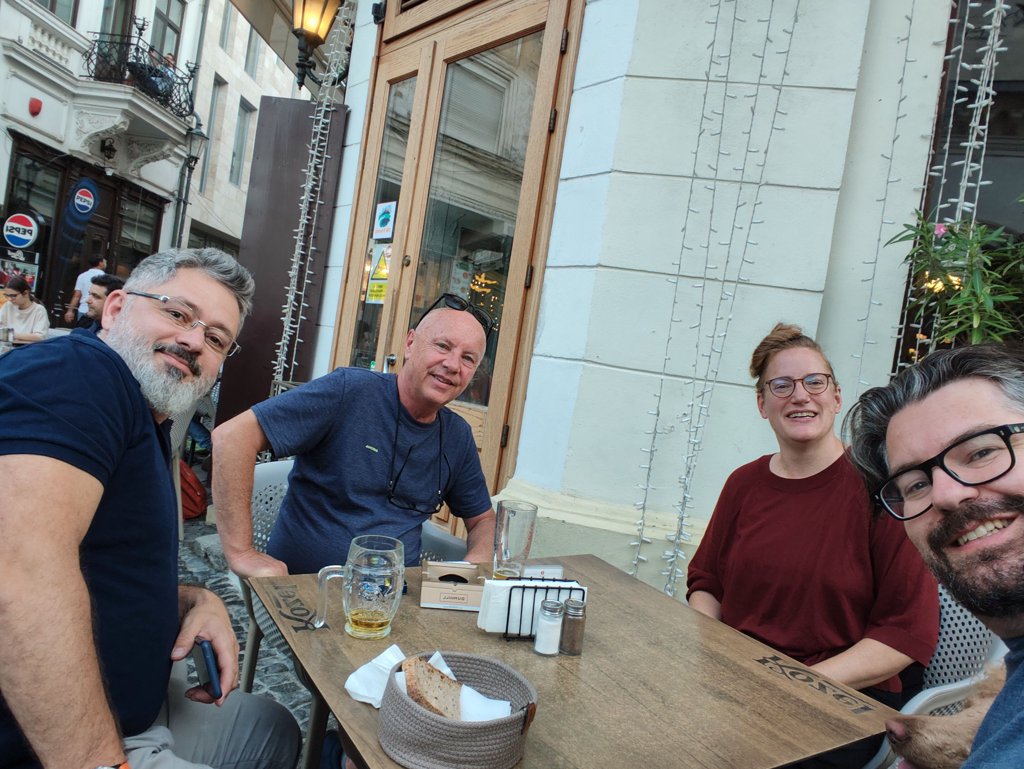
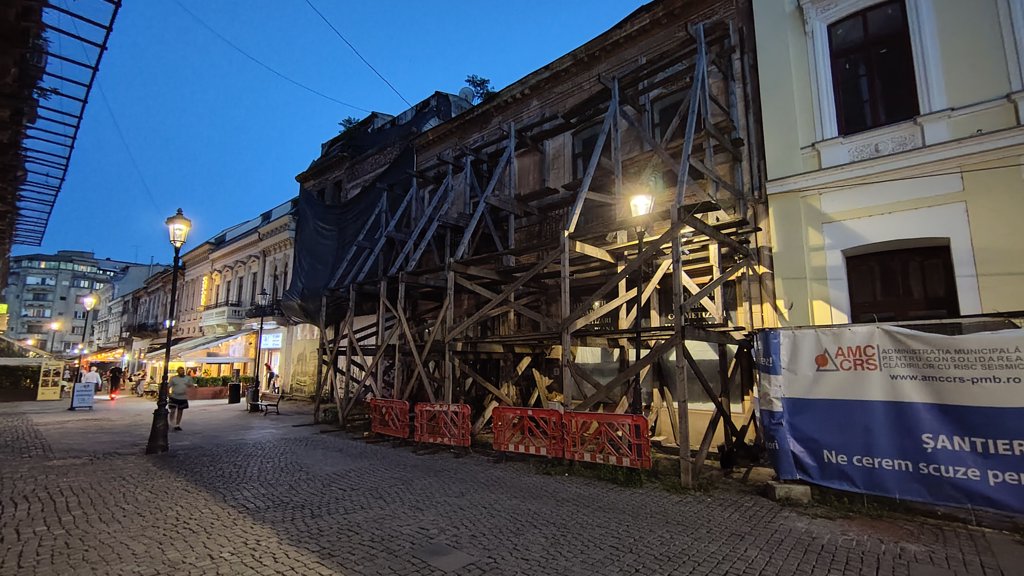
Politically, things are really boiling in Romania, and you do not just read about it in the paper, you feel it in the people. In Bucharest we meet Bogdan, who lives here and whom Alex met at her cat training in Athens. Bogdan is a grumpy soul through and through and although he seems to be doing well, you can feel the frustration. Everyone is corrupt and lazy, and if he is lucky his grandchildren will live to see the highway finished, because the money has seeped away somewhere. Bogdan also explains what is behind the partly completely ruined properties in prime locations: the communists expropriated everything and today it is not always clear who the owner is and thus who is responsible. In addition, houses are occupied by gypsies (his wording), and the state protects them; the owners lose out. With a bit of luck the houses will collapse in the next earthquake and then they can finally build something new. That many gypsies will die in the process does not seem to be much of an issue.
The political situation is a wild mess. The state is not able to collect taxes. Inflation is above 5% and the budget deficit is the highest in the EU. Let me try to sum up what I understood.
After a far-right Kremlin troll won the first round of voting, the established parties pulled themselves together and formed a broad coalition. But they all hate each other with great passion. Every tiny reform attempt dies in parliament. The coalition government does not work at all. Everyone is shamelessly playing client politics. And so it happens as it must: the left, despite promising otherwise, cuts a deal with the far right and brings down the government. The president loses his temper and unilaterally appoints a new prime minister, risking a split in the left.
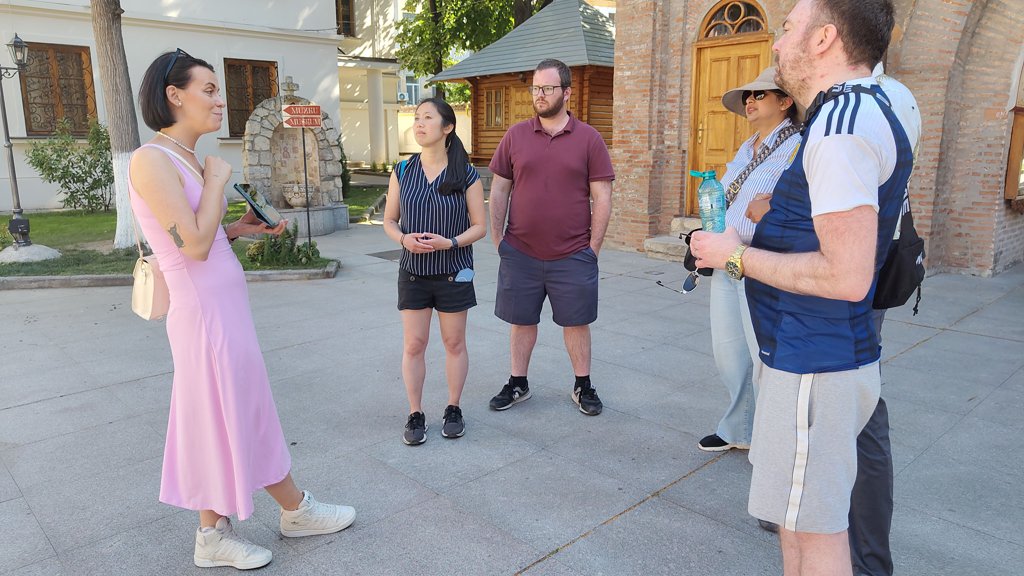
Basically, these are more or less normal processes in a democracy. But there is plenty of outside interference too in the form of social media campaigns and conspiracy theories. Interference from Russia, but also from MAGA nuts like Stephen Bannon, and of course the EU has an opinion as well. Then Russian and Ukrainian drones hit the NATO country and spread fear and terror. People are being softened up. My tour guide on the walking tour in Bucharest seriously thinks that civil war will soon break out and that she is ready to die in the front line. She also says, though, that she is in therapy, so maybe she is not fully representative.
Transfăgărășan
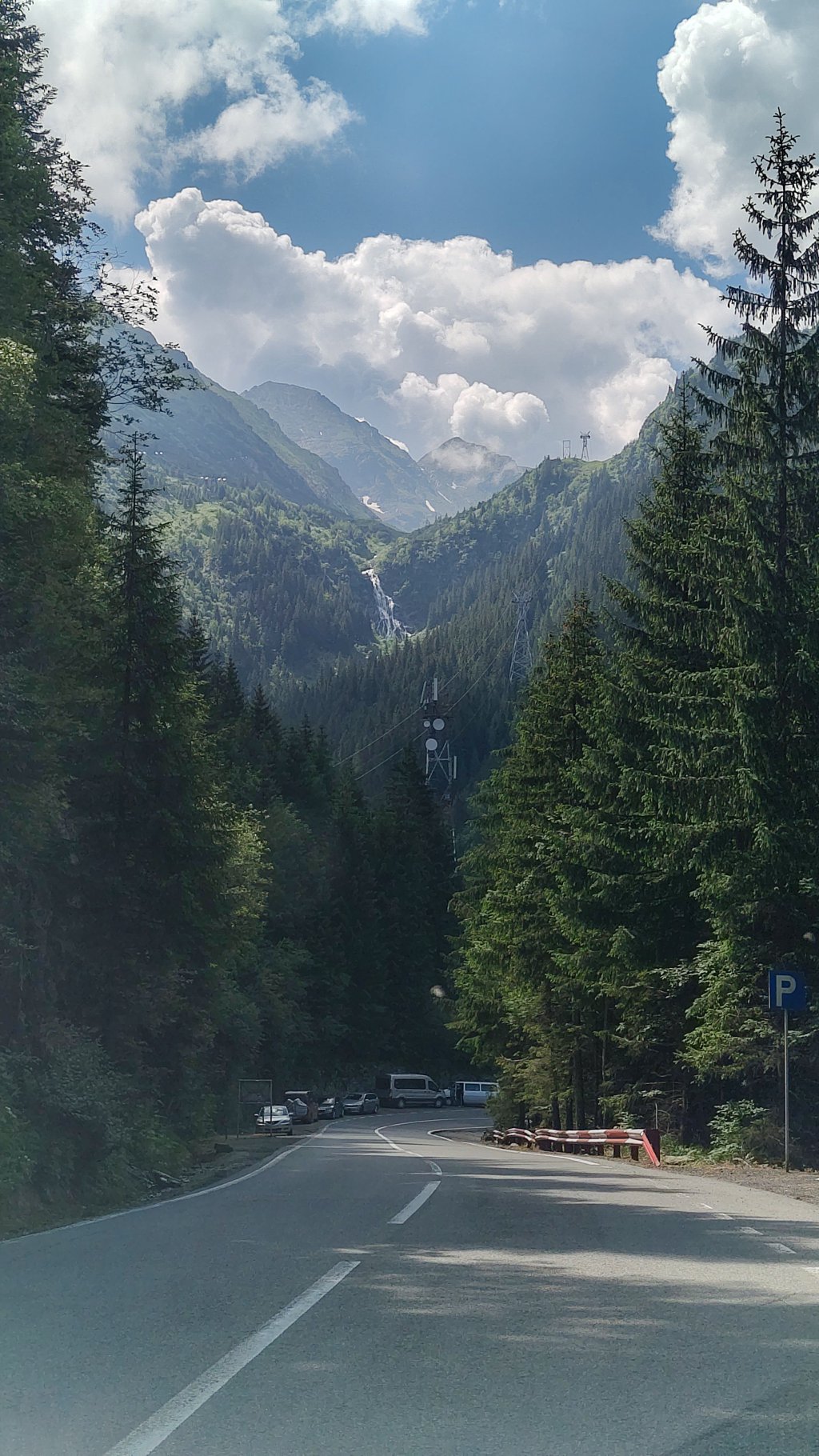
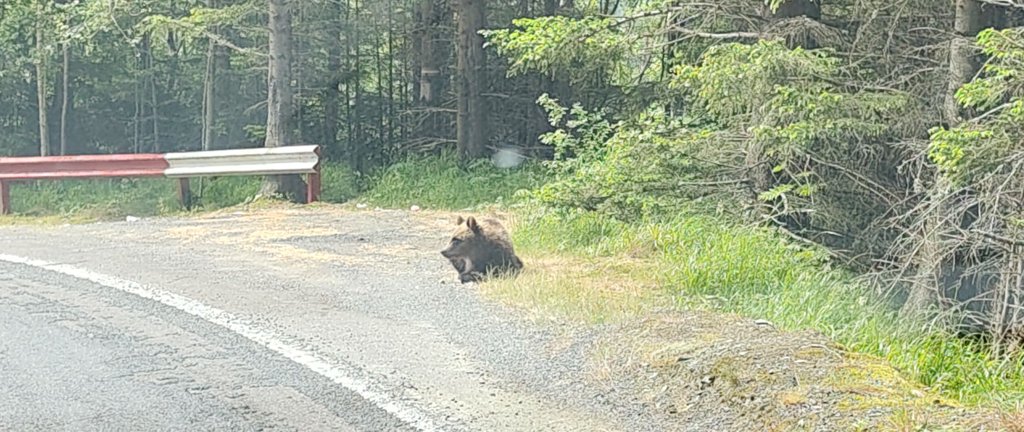
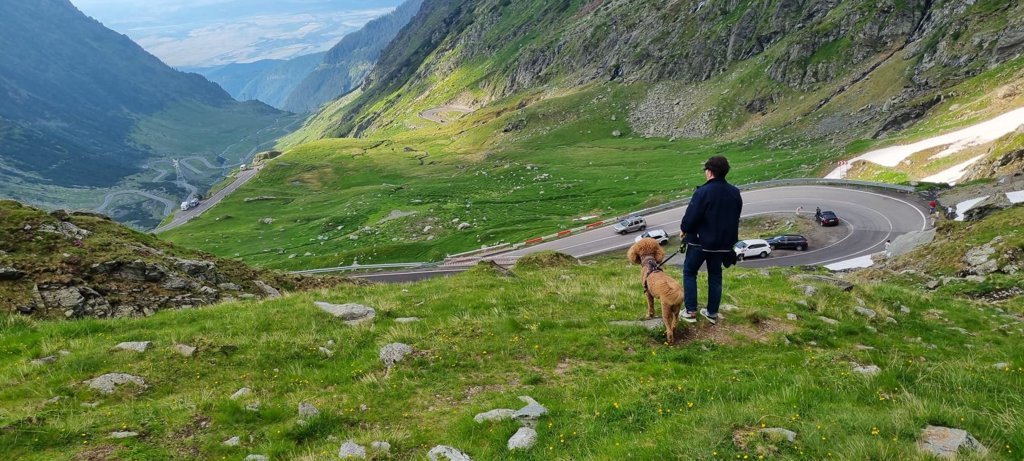
Another item on my bucket list is the Transfăgărășan. The road cuts right through the Carpathians and was named the most beautiful road in the world by none other than Jeremy Clarkson. Well, as far as mountain passes go, we Swiss are not that easy to impress. But the 150-kilometer route is truly spectacular, and what we definitely do not have in Switzerland: brown bears sunning themselves at the roadside and doing tourist watching as if it were the most normal thing in the world. We spend the night on the pass, where we celebrate Charly’s fifth birthday and eat surprisingly well.
Dracula
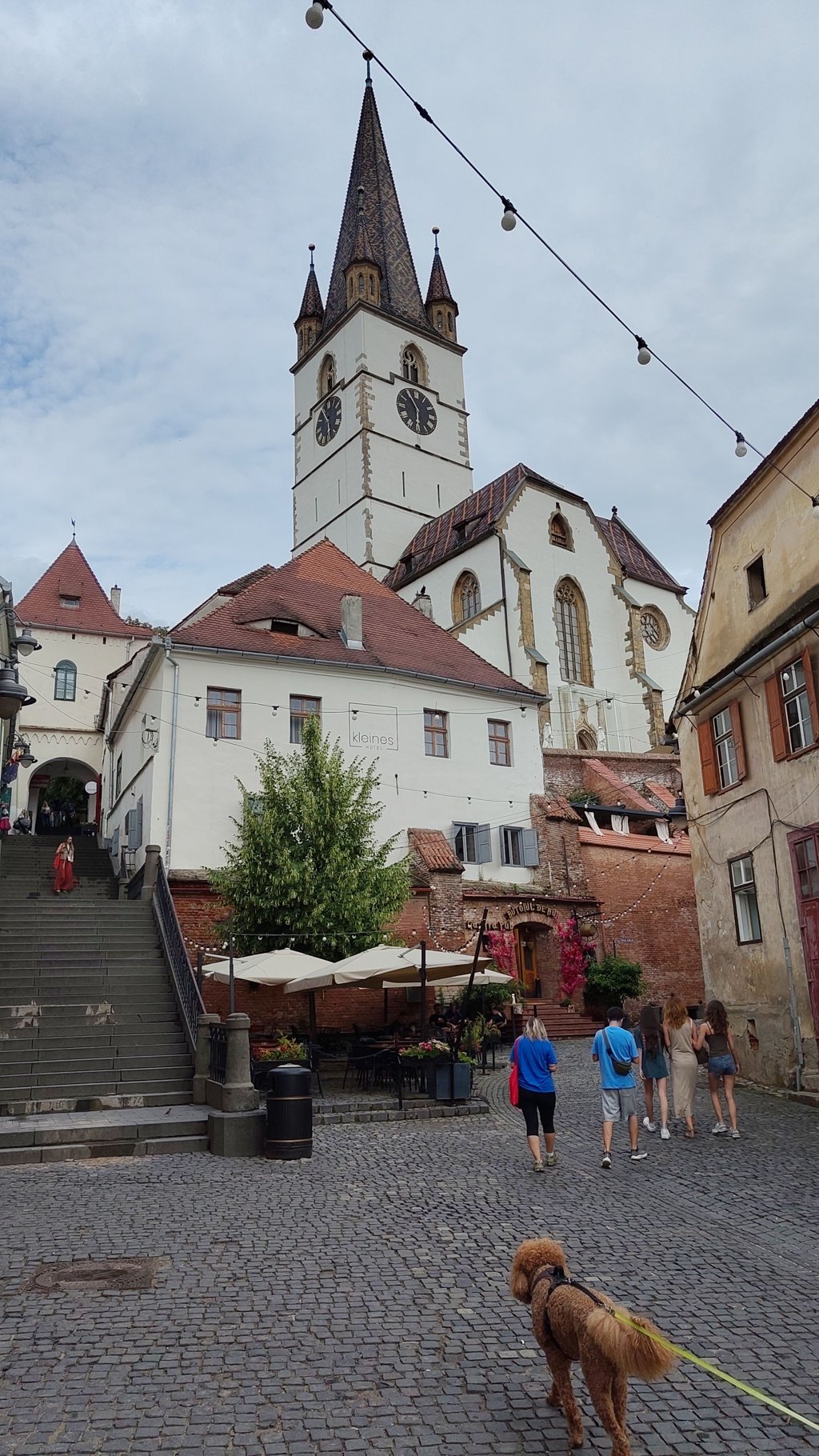
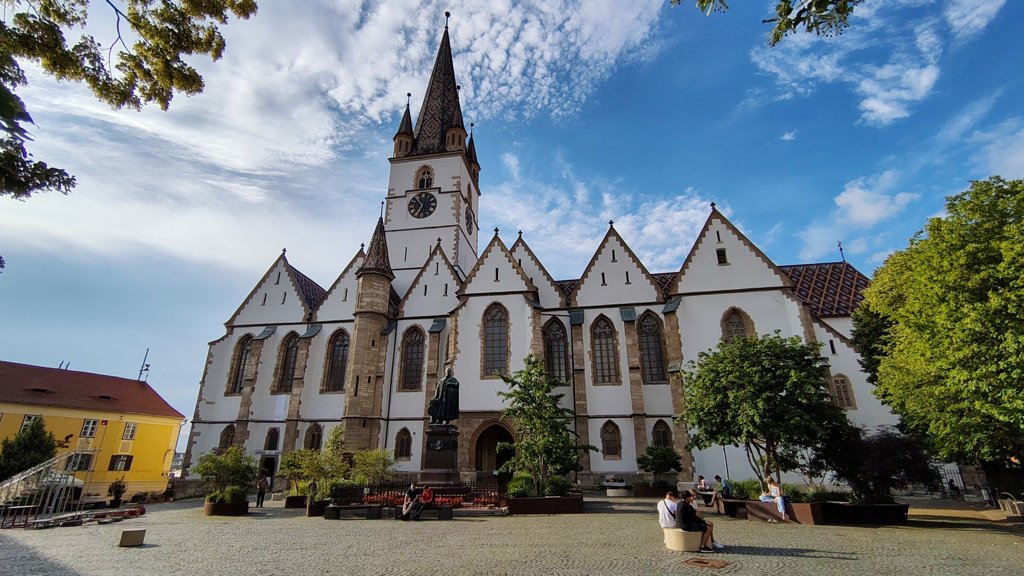
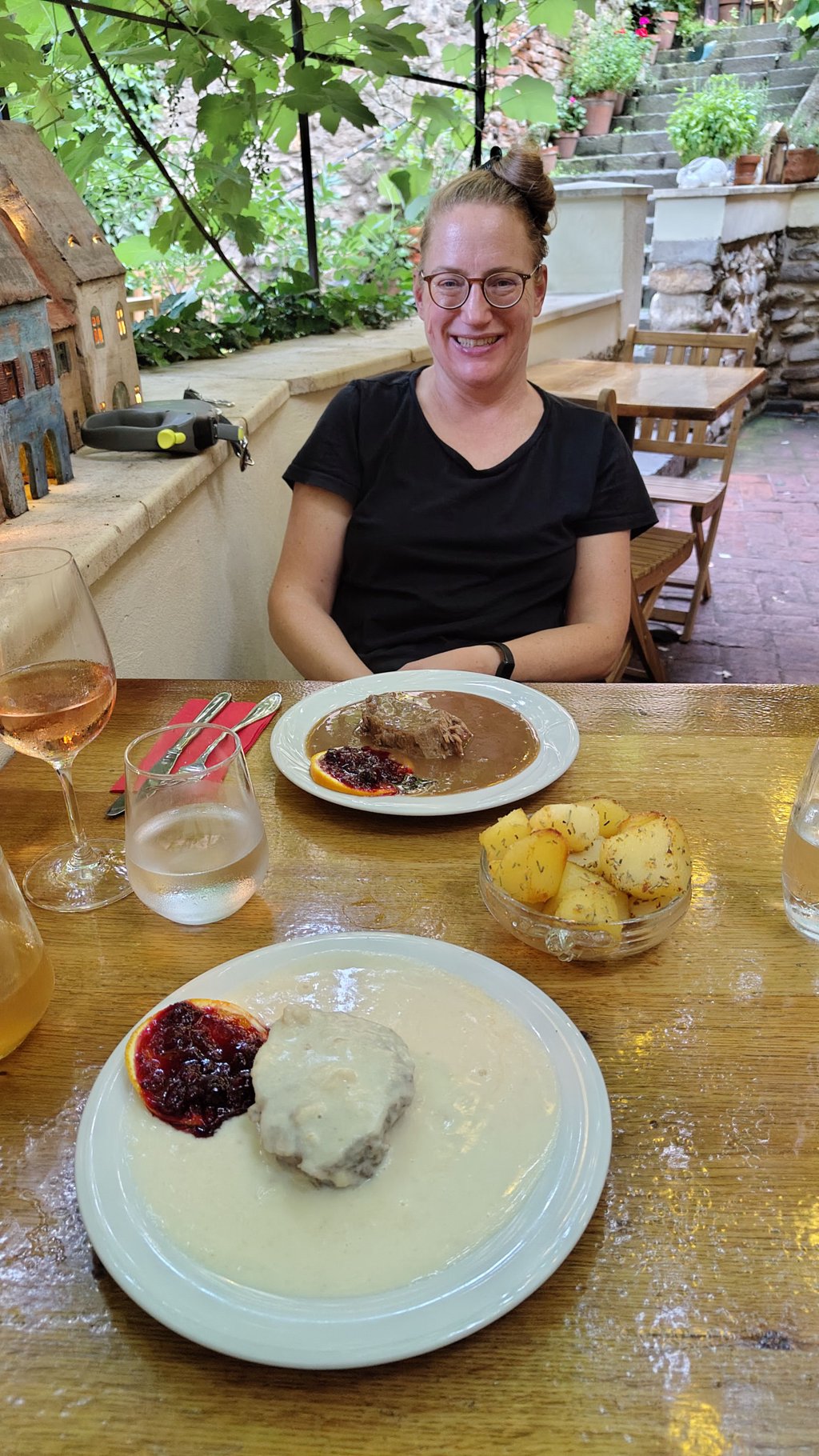
The next day we drive down the Transfăgărășan to the capital of Transylvania, Sibiu, where we stay for two nights. Here, the Bucharest political squabbles seem far away. The city is polished and top restored, you hardly see a single crumbling house, and the residents seem fully absorbed by the annual theatre festival, one of the biggest in the world. For 20 years the old town has been trying to get UNESCO World Heritage status, no idea what the snag is. I have definitely seen bigger nonsense with that status.
We continue on to Timișoara, where we spend one last night in Romania, and then travel on to Budapest, where the heatwave we have managed to escape so far will catch up with us.
Conclusion Romania
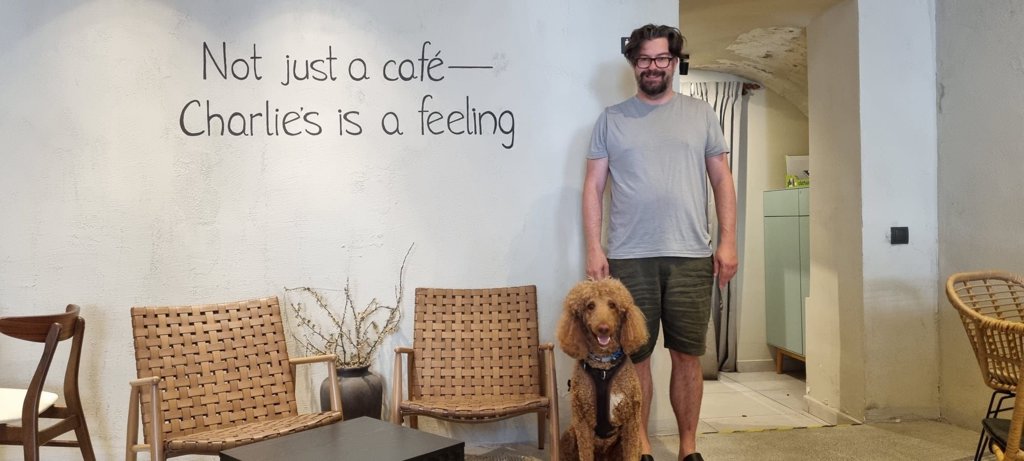
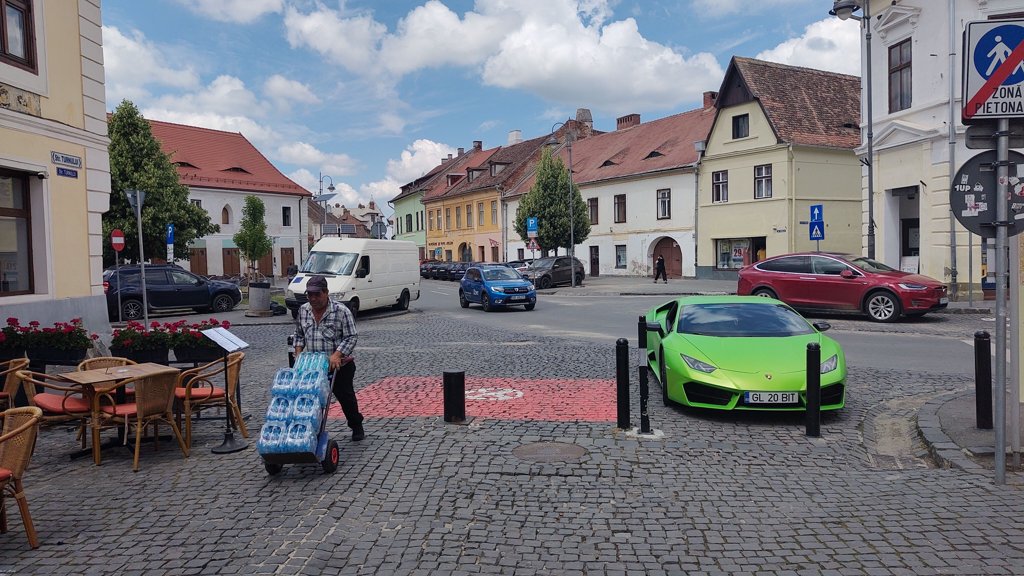
We really liked Romania and found it hugely interesting. The people are in a good mood and interested. Based on my last visit 20 years ago, I had imagined Romania to be poorer than it actually is. Romania too is now a completely normal European country with Lamborghinis and hipster cafés.
*This blog post has been automatically translated by a Large Language Model.