All on Our Own
Benno
After a charter trip on the Belize with a sailing instructor and friends, we are now out on our own for two weeks. Well, almost: Charly is of course with us, but unfortunately he is not much help when docking.
We picked up our Excess 11 from More Sailing in Preveza. After the complete madness at the last charter base, this is a relief. The boat is clean, more or less everything works, and Patrik, the pipe-smoking Swedish old sea dog, gives us his phone number. If anything comes up, we should just text or call. We will take him up on that.
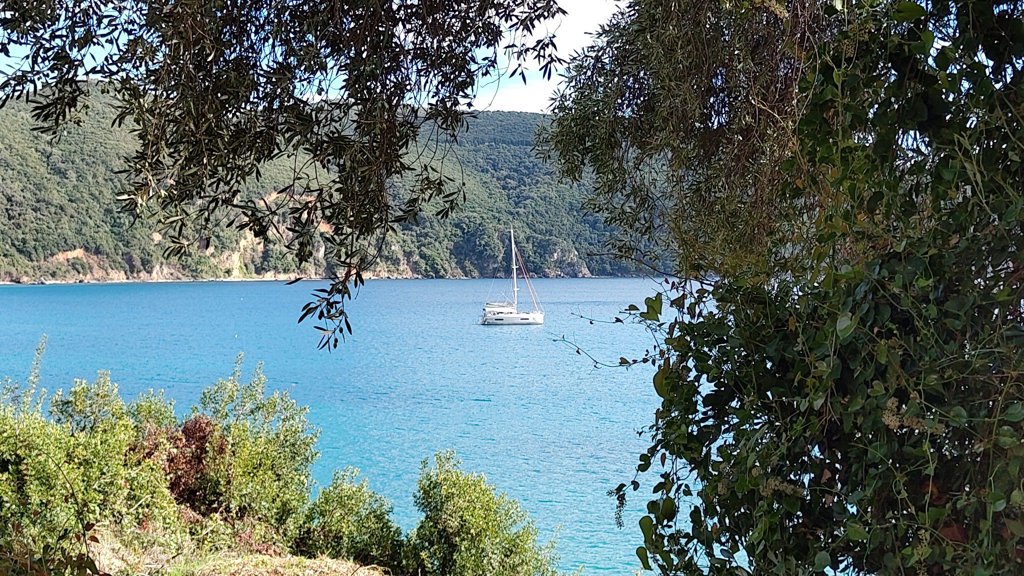
For the first few days, we want to take it easy. The plan is to cover short distances, find beautiful anchorages, and work out whether we can actually do this as a couple. Until now, there was always someone along who knew what to do in an emergency. Now we are the emergency.
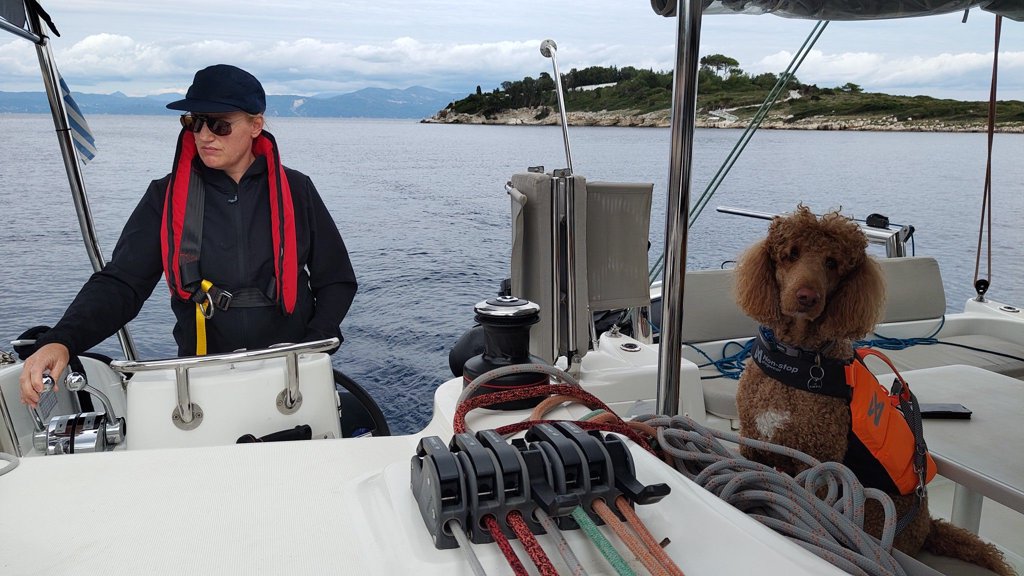
Even on the way to our first bay, we get hit by waves from the opposite direction. Alexandra feels sick, I feel sick, and later even Charly has to throw up. We anchor in the middle of an empty bay, take the dinghy ashore, and discover that an 8 hp outboard can be surprisingly intimidating. Especially when it cannot be properly controlled and only knows full throttle or nothing at all.
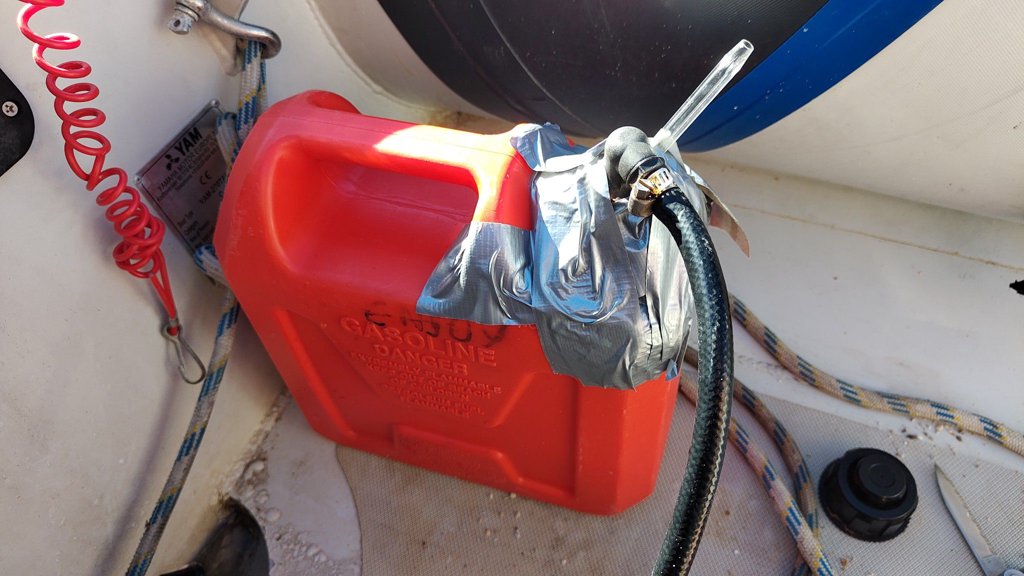
The next day, it rains without stopping, so we stay put. By now, the outboard is running even worse. Patrik suspects water in the fuel, and he is right: with the spare canister, the engine runs again. We build a replacement tank out of a red fuel can, duct tape, and part of a ballpoint pen. MacGyver would be proud.
The relief does not last long. The engine dies again and cannot be put into neutral. With 8 hp, that is not just inconvenient, it is frightening. Then, during the night, we get a warning about an empty starter battery, even though we ran the engine long enough the previous day. The inverter also shows an empty battery while the house batteries are supposedly half full. No idea what is connected to what here. We start the generator and watermaker and text Patrik again.
Just a few hours later, two More Sailing employees actually show up on shore and bring us a brand-new outboard. It can be operated properly and chugs along peacefully at idle. These days, that almost impresses me more than a beautiful bay: a charter company that simply fixes a problem instead of denying for three days that it exists.
Our next destination is Gaios on Paxos. We have reserved a berth in the harbour for two nights because stronger winds are forecast and we want to be safely moored. For the first time, we dock completely on our own. It is stressful, but it works. Nobody takes our lines, nobody tells us exactly where our reserved berth is supposed to be, but eventually we are alongside the pier. We are exhausted and a little proud too.
In the evening, the wind picks up within seconds and hits us full force from the side. The boat is pushed backwards, and the anchor does not hold. Alexandra is in the shower at the time, and a man who happens to be walking past the pier helps with a fender. I start the engines and try to motor against the load, but I have to give them plenty of throttle. Then the port engine cuts out. As soon as I engage gear, it dies again. Something must be caught in the propeller, even though there is not a line in sight anywhere.
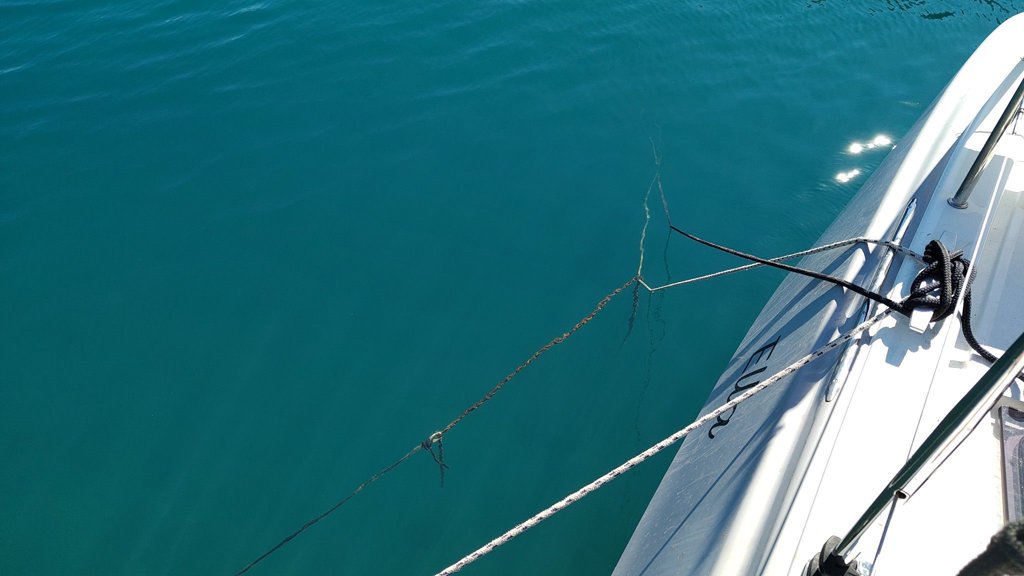
Our helper calls the port police. Dimitri from the port police appears and seriously demands that, in the dark and with around 30 to 40 knots of crosswind, we move the boat farther into the old harbour area with only one engine. There is supposedly less wind there. I refuse. A fisherman watching the situation says he would not do it either, and he is a professional. He finds an anchor or mooring line that we can secure ourselves to as well. He also gets the engine running again by engaging reverse first and then forward. Whatever was in the propeller comes free. With both engines, we can now motor against the load and are reasonably stable.
Dimitri still wants our boat papers and wants to take me to the police station. I explain that as long as my boat is not safe, I will not leave it. He shuffles off with the boat papers. Two hours later, he brings them back and suddenly the police station no longer seems so important. But if the engine breaks down again, we should definitely not head out. Thanks for the tip.
I keep watch until three in the morning. Around midnight, the wind slowly eases, and at one o’clock we take the engines out of gear. Alexandra would rather leave them running. I sit in the cockpit, stare at our lines, and think: What kind of life have we chosen for ourselves…
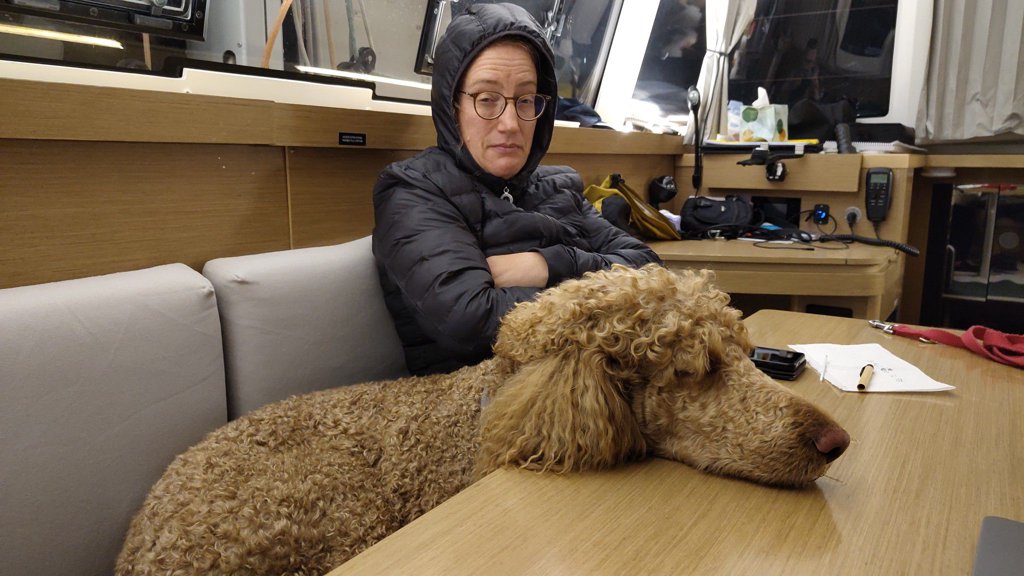
The next morning, there is no wind. Even so, we need to at least reset the anchor, or better still, move to another spot. By now, we have even found a mooring line and try to get back to our berth. With a ridiculous five knots of crosswind, we cannot manage it. Nobody is there to take our lines, and one of us would have to jump from the boat onto the pier after a sleepless night. That risk is not worth it. We call it off and leave Gaios.
In Kipiadi Bay, we take anchoring very seriously now. We set the anchor three times. On the third attempt, it holds for three minutes at full throttle in reverse. I still do not trust it, so I go snorkeling. The anchor is caught in a clump of seagrass. When Alexandra gives it throttle again, it actually comes loose. A little farther on, it finally digs properly into the sand. More chain, anchor alarm on, check the weather forecast again. After the night in Gaios, we do not want any more surprises.
After that, almost nothing happens for two days. When sailing, that is the best possible state of affairs. We sit in a peaceful bay, the sea is glassy calm, and Charly can go ashore. Slowly, our pulse comes down.
Next, we head to Lakka, where even this late in the season it is still properly crowded, and then back to the mainland to Parga. So far, we have barely sailed. When some wind finally arrives, the mainsail halyard is twisted and I cannot get the mainsail all the way up. So our sailboat remains mostly a motorboat with very tall masts.
In Parga, we are woken at three in the morning by another boat touching us. The bay is huge, but the German Sun Odyssey apparently had to anchor right beside us. Monohulls swing differently from catamarans when the wind and current change. Our neighbour re-anchors and is then far away. In the morning, a naked man from the monohull asks for our boat’s name and explains that nothing is damaged on their side. Whether we have any damage does not seem to interest him. The other two crew members disappear ashore in the dinghy without even saying good morning.
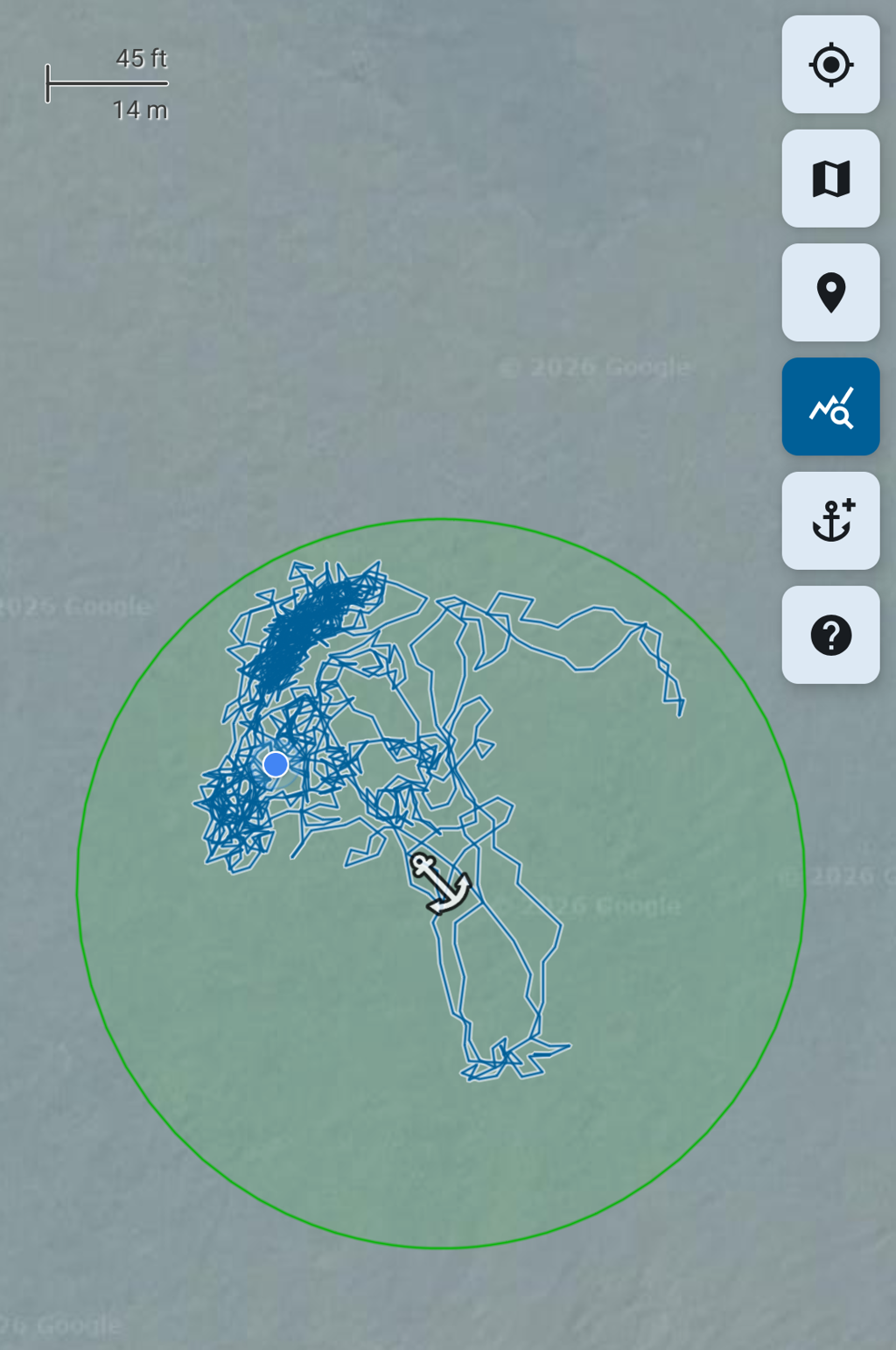
At the same time, a storm warning is issued. We head back to Ammoudia, where we had already spent two safe nights. During the night, a thunderstorm passes to the north and builds up a surprisingly large swell. The anchor holds. On the anchor alarm, our movement looks like a drawing by a three-year-old after too much sugar, but we stay within the circle.
After nearly two weeks, we head back to Preveza. With one fender less, which we lost somewhere, probably on the stormy night in Gaios. All in all, that is not a bad tally. Patrick merely says dryly: one fender per week is included in the charter.
These two weeks were not relaxing. We had seasickness, thunderstorms, technical problems, a dragging anchor, an engine on strike, contact with another boat, and yet another encounter with the Greek port police. But we also learned that the two of us can manage this. Not always elegantly and certainly not calmly, but we make sensible decisions, abandon manoeuvres that are unlikely to work, and usually find another solution.
The Excess 11 was a good test boat for that. It offers more than enough space for the three of us, can be manoeuvred by two people, and probably sails quite sportily too, if you can get the mainsail up and have wind. But much more importantly: after two weeks entirely on our own, we have not decided to give up sailing. Quite the opposite. We are ready for our own yacht.
*This blog post has been automatically translated by a Large Language Model.